Quieten your inner critic and begin to live a happier, more successful life.
Do you have a little voice in your head, constantly telling you that you are not good enough, nobody will want to read or buy your work, you’re too old or too young, or a million other negative jibes?
If you do, you are in good company. Most of us have this nagging little voice from time to time, and for some it can be an almost constant companion. The good news is you can learn to silence this annoying critic and develop an encouraging, friendly and positive voice in its place.
Everyone has that inner voice, the one that’s a Negative Nancy. I’d say to ignore that voice and to be confident and follow your heart.
– Katharine McPhee
Become Aware
The first thing to do is to become aware of the critic. Start to listen to the thoughts that run through your head. Sometimes it is just there in the background. Like an annoying noise we don’t notice until it stops, it is constantly feeding us negativity. And when we silence it, everything becomes clearer and we can develop self confidence and self belief.
Your Journal Is Your Friend
You can use journaling to note down the negative thoughts, and watch for patterns. What thoughts are constantly running through your head? Which ones do you repeat over and over? Whose voice are they in? Maybe it’s your own voice, or the voice of an overly critical parent or old school teacher. Perhaps a boss who was always on at you. Write it all down, and get familiar with it.
Quieten Your Inner Critic And Turn It Around
Use affirmations that you create by turning the negative thoughts into positive ones. Now that you are aware of what is happening, you can start to change it. ‘I’m too old’ becomes ‘you’re never too old’, ‘nobody would want to read this’ becomes ‘there are people this would really help’. Every time you find the old self criticism pop up, just repeat your positive affirmation. This will soon become your new way of thinking.
Women need to shift from thinking, ‘I’m not ready to do that,’ to thinking, ‘I want to do that, and I’ll learn by doing it.’
– Sheryl Sandberg
Be Kind To Yourself
Really practice being kind to yourself. Would you talk to your child, a colleague or a friend that way? Treat yourself as kindly as you treat others. If you notice negative thoughts, picture yourself in conversation with your best friend. What would you say to her in the same situation? Learn to speak that way to yourself.
Learn to be kind to yourself. Let your mind free, close your eyes, breathe deeply and remain calm. Life is majestic and meaningful enough.
― Shaa Zainol
Reframe Your Relationship
Your inner critic is well meaning, and trying to keep you safe. It doesn’t want you to fail. You can reframe the relationship and take charge. Let your rational, logical brain take over and take charge. You know what you can do, what you are capable of.
Want to know more about how you can quieten that nagging inner critic? Download my FREE PDF and learn 5 ways to do just that:
Many years ago, a mentor said to me, “you don’t have to believe everything you think'” and added, “a lot of the thoughts aren’t yours anyway. You just pick them up out of the ether or from passers-by”. To be honest, I was a bit sceptical. But it is one of those seed ideas that has stuck with me over the years, and I’ve realised it is very true.
How often does a thought just pop into your head, and you have no idea where it came from? I know it happens to me all the time. Becoming more self-aware helps us to realise this.
Meditation and Journaling
Meditation and journaling can help with this. For a few days, try to note down any stray thoughts that seemingly pop up out of nowhere. Do you sometimes think, ‘I could kill him’ or something similar? It’s very unlikely you really want to kill someone, it’s just a thought that enters your head.
How often do you think things such as, I’m so stupid, I’m too old/young, too fat, too thin, too tired, too technologically challenged etc.? You don’t have to believe those thoughts any more than you believe the thought, ‘I could kill him’.
And if you have a thought that you have absolutely no idea where it came from, it’s probably one you’ve picked up from someone else.
All of these thoughts are just stories we tell ourselves. We don’t have to believe them. What can you do about them?
How To Stop Them
The number one thing is to realise that everyone has strange, weird and wonderful thoughts. Sexual fantasies, violent thoughts, negative thoughts. Even happy, fun thoughts.
It’s not possible to stop thoughts, and usually the more we try, the more persistent they are. Acceptance is the key. Buddhists have a practice of labelling the thoughts. You can just try saying, ‘a mind full of thoughts’ and return to your breath.
Replace Negative Thoughts With Positive Ones
If you find you are having lots of negative thoughts, develop a practice of replacing them with positive thoughts. The more you do this, the more your thoughts will naturally become more positive. It will take a while, but eventually you will realise you have become a much more positive person. Repeat the positive thought over and over as you go about your day.
This doesn’t mean negative thoughts are ‘wrong’ or you shouldn’t have them. They are a natural part of life. They are just not the type of thoughts we want to dwell on, if we want a strong, positive mindset.
Technologically Challenged
‘I’m technologically challenged’ is one of the most common phrases I hear people say online. It’s a story lots of people take as a fact. I believe in most cases this is much more of a mindset issue than a technological issue. People get stressed out, tell themselves they can’t do something and it becomes a self fulfilling prophecy. Their stress causes them to have a mind that won’t work efficiently, it goes blank.
When I need to figure out some new technology, I just follow instructions slowly, carefully, step by step. And it’s rare there is something I can’t get done. YouTube is also a great resource, there’s a video for how to do just about anything, explained in detail.
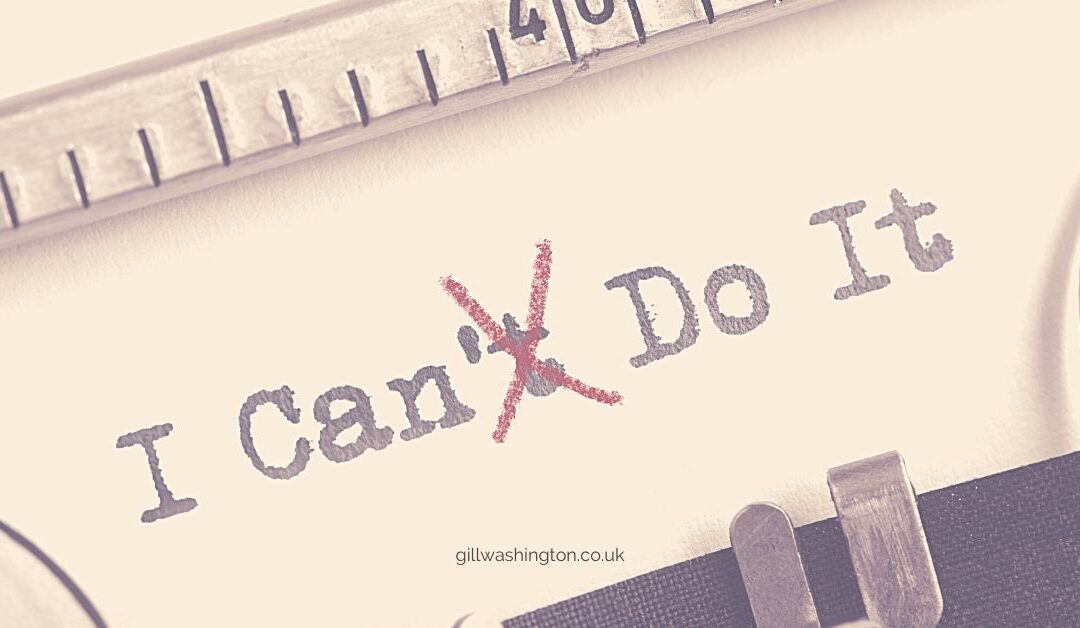
If you find yourself saying you can’t do something because you suck at technology, just try repeating to yourself, ‘I can learn how to do this’. You may find that you’re not as challenged as you thought you were.
This process can be used to overcome pretty much any limiting belief we have. Just know that you can learn how to do it, and can change your language around the problem. I have managed to lose almost 3 stone in weight, and be alcohol free for 4 years next month, by not believing the thoughts that tell me I can’t do it.
Mindfulness For Busy People
Check out my 21 day email course if you would love to start a regular mindfulness practice but don’t know where to start, or feel you are too busy.
This is the last in a 15 part series of Month of Mindfulness posts
Over the last month I have posted 15 posts (including this one) giving an overview of how mindfulness can help in various areas of life. All of these posts are quite short, most about 2-3 minutes to read. They are an overview of how mindfulness can help, rather than an in-depth look at how to practice. So I encourage you to give them all a read, and learn just how much a regular mindfulness practice can help you. I will give a short outline of each below, or you can get the full list by clicking the following link: A Month Of Mindfulness
A massive 57% of all work days lost to ill health were due to stress and anxiety. This post looks at what causes stress and how mindfulness can help to reduce it.
Unchecked emotions are a source of personal unhappiness and troubled relationships. This post looks at getting in touch with emotions and accepting them.
Some people write articles about mindfulness being dangerous. While there can be circumstances when prolonged meditation may not be a good idea, read my thoughts on this in this post.
A chronic lack of sleep, along with anxiety, is a huge problem for modern society. The two often go hand in hands. Learn how mindfulness can help you get better quality, and quantity of, sleep.
With an increasing number of elderly people in society, cognitive decline is a growing problem. Read about the positive results from studies into mindfulness and cognitive ability
Boundaries are essential for our own wellbeing. Learn how to set them confidently and mindfully, and stick to them.
(15) Mindfulness Overview
The 15th post is this one, bringing the series to a close.
You have hopefully learned how mindfulness can improve every area of your life. Many of the practices, such as coming back to your breath, can be applied in any situation.
“When you’re feeling frazzled, put all of your attention on the breath. It’s a portal into the present moment, the best remedy for stress.”
— Ellen Barrett
Mindfulness For Busy People
If you have enjoyed this series and would like to begin a mindfulness practice, check out my 21 day email course Mindfulness For Busy People especially if you always feel like you don’t have time or don’t know where to start. The course is also beneficial if you are an experienced mindfulness practitioner or meditator but have let your practice lapse or would just like some fresh motivation.
Feel free to contact me if you would like to work one to one, or have any questions.
Gill
Gill Washington does not provide medical advice, diagnosis or treatment. See additional information
This is the 14th in a 15 part series of Month of Mindfulness posts
“Daring to set boundaries is about having the courage to love ourselves even when we risk disappointing others.”
— Brene Brown
People Take Advantage
We need to set boundaries in all of our relationships. Significant other, children, friends, colleagues, bosses. If we don’t, people will take advantage – it’s human nature.
Women in particular can have a hard time setting boundaries, and find it difficult to say no. This is something I find difficult too, but know it is something I have to do for my own peace of mind. And so I work at it.
How do people push our boundaries? They may disrespect our time, or our feelings. Children may expect us to ferry them here, there and everywhere. Colleagues may expect us to do way more than our fair share of work. Bosses may expect us to stay late at the drop of a hat, even though we have prior arrangements. Clients may be late and still expect a full session, or cancel at the last minute and expect not to pay.
It is perfectly okay to say no to any of these requests. And it’s also perfectly okay to state what your boundaries are, and stick to them.
Learn To Say No
“No is a complete sentence.”
– Anne Lamott
It’s important to learn how to say no confidently and assertively. If people have been used to you doing whatever they want, whenever they want, they may not like it when you change. It’s important to remain calm and aware while sticking to your guns.
Calmly explain to someone that you are not able to do what they want. You can tell them why, but you don’t owe them an explanation. You also don’t need to apologise – you haven’t done anything wrong.
Fear Of Conflict
“The only people who get upset about you setting boundaries are the ones who were benefiting from you having none.”
– unknown
Fear of conflict is often why people give in and do whatever is asked of them, even if it is at great cost to themselves. This fear causes them to shy away from setting mindful boundaries. What’s being asked of you may take your time, your energy and your money. If you have been meditating and doing other mindful practices, you will be more self-aware, more assertive, more responsive and a lot less reactive.
If someone attempts to draw you into an argument, do some deep breathing. Check out the Mindfulness And Emotions post in this series for ideas on how to keep your emotions in check. Try to remain compassionate and non-judgmental of the other person, at the same time as retaining your own sense of self-respect. Remaining mindful throughout the conversation will help.
Excuse yourself and nip to the bathroom and do some breathing exercises if you need to.
Respect Yourself
“When you say ‘yes’ to others, make sure you’re not saying ‘no’ to yourself.”
—Paulo Coelho
Of course we are always going to want to help others. Setting mindful boundaries isn’t about always saying no. It’s about learning to say no when what is asked for is not something you want to do, or can do without saying no to something you really want to do for yourself.
Be bold, be assertive, set those boundaries and stick to them.
Gill Washington does not provide medical advice, diagnosis or treatment. See additional information
This is the 13th in a 15 part series of Month of Mindfulness posts
The most powerful way to change the world is to live in the front of our children the way we would like the world to be.
-Graham White
Anyone who is a parent knows it is both the most rewarding and the most challenging job. Being a mindful parent can help you to get through the difficult times with more ease, and greater enjoyment of the good times.
Sleepless nights, toddler tantrums, childhood illnesses, teenage petulance, to name just a few of the tests. It is no wonder that even the most laid back parents some times lose it. It is easy to become stressed out and overwhelmed.
“When parents become stressed that stress becomes contagious; children know when their parents are tense and overwhelmed. In fact, according to Dr. Amy Saltzman, a holistic physician and mindfulness coach (and creator of the Still Quiet Place CDs for Young Children and Teens), “Data shows that the greatest source of childhood and adolescent stress is not school work, extracurricular activities, or peer pressure, but parental stress.” So being a good parent means learning to manage your own stress.”
We looked at stress in an earlier post in this series, How Mindfulness Reduces Stress, and most of the 15 posts in this series touch on stress in some way.
Mindfulness For Busy People
Of course it can seem impossible to find time for yourself when you have parenting duties, work responsibilities, home chores and a social life to manage. I’m not saying it will be easy, but I can promise it will be well worth it to fit some mindfulness practice into your daily life. The benefits will more than recompense for any time you spend.
If you want to learn more about how you can gain maximum benefit from mindfulness with minimal time expenditure, check out my Mindfulness For Busy People mini course to learn how I can help.
Children Watch And Learn
If your children see you doing a mindfulness exercise, they are likely to ask you what you are doing. Explain to them simply you are practicing being mindful. Tell them how it helps you to be a calmer parent.
Encourage them to do a little breathing exercise with you, but don’t force them. If they say they don’t want to, just let it go. As they see you getting calmer, they may want to give it a go. Let it happen when they are ready. Just breathing in and out two or three times can give them a taster.
If you are in the garden or a park, try looking at a leaf and describing it in great detail. Ask them how it looks, feels, smells. Go into as much detail as possible. Try to just focus completely on the leaf in the present moment.
Respond Don’t React
Being a mindful parent is about being present and being aware in a non-judgmental way.
As always with mindfulness, we are learning to respond rather than react. If your toddler (or teen) has a temper tantrum and you respond with a tantrum of your own, they are learning that it is ok to behave that way. Instead, try to take a deep breath before saying anything at all. Just that pause can help you to calm down.
Try to listen to why your child is upset. Children sometimes find it difficult to express themselves. Even older children may not be able to explain exactly what is going on with them.
Whatever age they are, children are still learning (as are we all). Allow them to learn. Allow them to make mistakes without getting frustrated with them. Let them spill their food, button their cardigan the wrong way, make spelling mistakes without getting angry. See it as part of their growth. Just keep encouraging them.
Continue Your Own Practice
When you continue with your own regular mindfulness practice, mindful parenting will become much easier. You will be more calm and balanced and will be setting an excellent example for your children. The whole family will benefit from this.
Gill Washington does not provide medical advice, diagnosis or treatment. See additional information
This is the twelfth of a 15 part series of Month of Mindfulness posts
Stress In The Workplace
Stress in the workplace is a serious problem, and for some people can be overwhelming. This stress is usually related to workload or dealing with ‘difficult’ people. This can lead to anxiety, depression and even panic attacks.
Mindfulness can help to reduce this stress, resulting in improved relationships and increased efficiency. Even if you are the only person in the workplace practicing mindfulness, it can have a beneficial effect on the whole team.
“The main business case for meditation is that if you’re fully present on the job, you will be more effective as a leader, you will make better decisions and you will work better with other people”
– William George
Take A Few Minutes
Take just a few minutes at the start of your working day to do some breath work. Sit at your desk, or find a quiet space, and just follow your breath for a few minutes. This will get your day off to a positive start. Try to repeat this whenever you start to feel stressed.
As you become more self-aware, you will spot the signs more quickly. Do some breathwork as soon as you can.
If you have a difficult encounter coming up, take a few minutes to visualise the meeting and the outcome. Really feel how it will be when you achieve a positive outcome. If you are ruminating on how difficult the encounter is going to be, that is what will manifest.
Don’t beat yourself up if you find yourself having negative thoughts, just turn them around into positive ones.
If you have a difficult decision to make, or strategy to plan, get yourself into a good place with a few minutes of mindfulness, so that you are thinking clearly, calmly and rationally. Don’t use Mindfulness as an escape from thinking things through carefully and clearly though. Rather, use it to help you do just that.
Try to fit in at least one three minute breathing space meditation throughout the working day, setting aside technology for a few minutes. Don’t look at email or your phone etc. Try to have at least one break away from your desk, and away from colleagues if possible. Use the time to focus, become self-aware and just relax.
“Between stimulus and response there is a space. In that space is our power to choose our response. In our response lies our growth and our freedom.”
— Viktor Frankl
Four A’s To Reduce Workplace Stress
Avoid – not all stress can be avoided, but at times it can. Learn to set boundaries, say no, and let go of ‘should’ when possible. If there is a situation that you know makes you feel stressed, avoid it if it is not necessary to be there.
Alter – learn to be more assertive, and also learn to compromise. Try to understand the other person’s point of view. They may feel they are right and you are being difficult. Try to really listen and find out why they feel the way they do.
Adapt – if a stressor can’t be avoided, change your attitude. Focus on the positive, and look at the big picture. Is this worth getting upset about? What good will getting upset do? How can you look at things differently? What changes can you make around the situation.
Accept – some things cannot be changed. Look for the lesson in the situation and accept that this is how it is for now.
S.T.O.P
Another mindfulness technique that can be very useful is S.T.O.P. This can be useful whenever you’re feeling stressed, and can be particularly useful in the work place. It helps as a pattern interrupter, and to bring you back to the present moment.
Stop— or pause. You can say stop to yourself, and stop whatever you are doing.
T — Takea breath just follow your breath for a few complete cycles. Let that be your focus.
O — Observe the body, thoughts, feelings, emotions, and physical sensations. Just notice non-judgmentally what is going on.
P — Proceed with more awareness and mindfulness.
Repeat this as and when needed. The whole thing can be done in a matter of minutes or even seconds.
Taking the time to practice mindfulness in work benefits everyone, and also benefits the company itself. If you find it works for you, encourage your colleagues to try it also.
We use cookies on our website to give you the most relevant experience by remembering your preferences and repeat visits. By clicking “Accept All”, you consent to the use of ALL the cookies. However, you may visit "Cookie Settings" to provide a controlled consent.
This website uses cookies to improve your experience while you navigate through the website. Out of these, the cookies that are categorized as necessary are stored on your browser as they are essential for the working of basic functionalities of the website. We also use third-party cookies that help us analyze and understand how you use this website. These cookies will be stored in your browser only with your consent. You also have the option to opt-out of these cookies. But opting out of some of these cookies may affect your browsing experience.
Necessary cookies are absolutely essential for the website to function properly. These cookies ensure basic functionalities and security features of the website, anonymously.
Cookie
Duration
Description
cookielawinfo-checkbox-analytics
11 months
This cookie is set by GDPR Cookie Consent plugin. The cookie is used to store the user consent for the cookies in the category "Analytics".
cookielawinfo-checkbox-functional
11 months
The cookie is set by GDPR cookie consent to record the user consent for the cookies in the category "Functional".
cookielawinfo-checkbox-necessary
11 months
This cookie is set by GDPR Cookie Consent plugin. The cookies is used to store the user consent for the cookies in the category "Necessary".
cookielawinfo-checkbox-others
11 months
This cookie is set by GDPR Cookie Consent plugin. The cookie is used to store the user consent for the cookies in the category "Other.
cookielawinfo-checkbox-performance
11 months
This cookie is set by GDPR Cookie Consent plugin. The cookie is used to store the user consent for the cookies in the category "Performance".
viewed_cookie_policy
11 months
The cookie is set by the GDPR Cookie Consent plugin and is used to store whether or not user has consented to the use of cookies. It does not store any personal data.
Functional cookies help to perform certain functionalities like sharing the content of the website on social media platforms, collect feedbacks, and other third-party features.
Performance cookies are used to understand and analyze the key performance indexes of the website which helps in delivering a better user experience for the visitors.
Analytical cookies are used to understand how visitors interact with the website. These cookies help provide information on metrics the number of visitors, bounce rate, traffic source, etc.
Advertisement cookies are used to provide visitors with relevant ads and marketing campaigns. These cookies track visitors across websites and collect information to provide customized ads.






Recent Comments